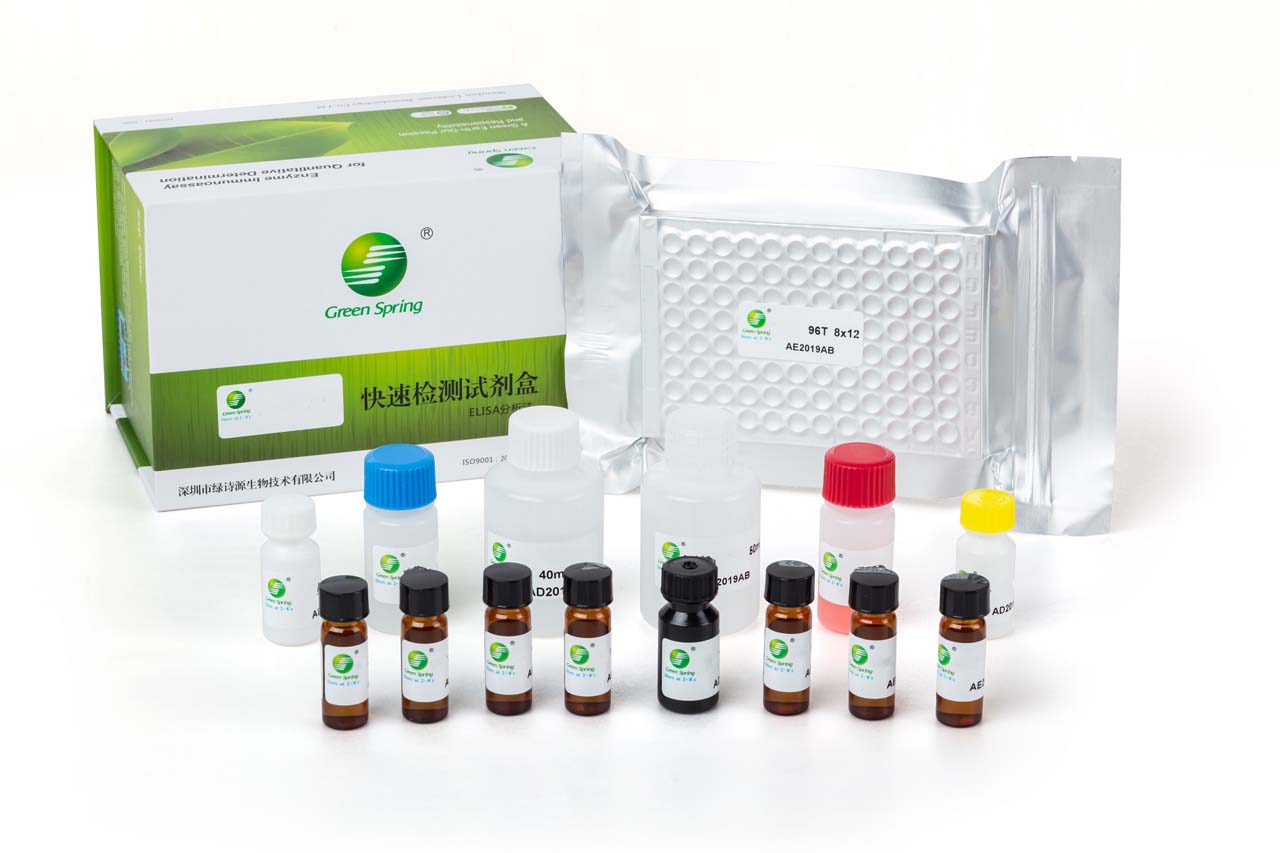
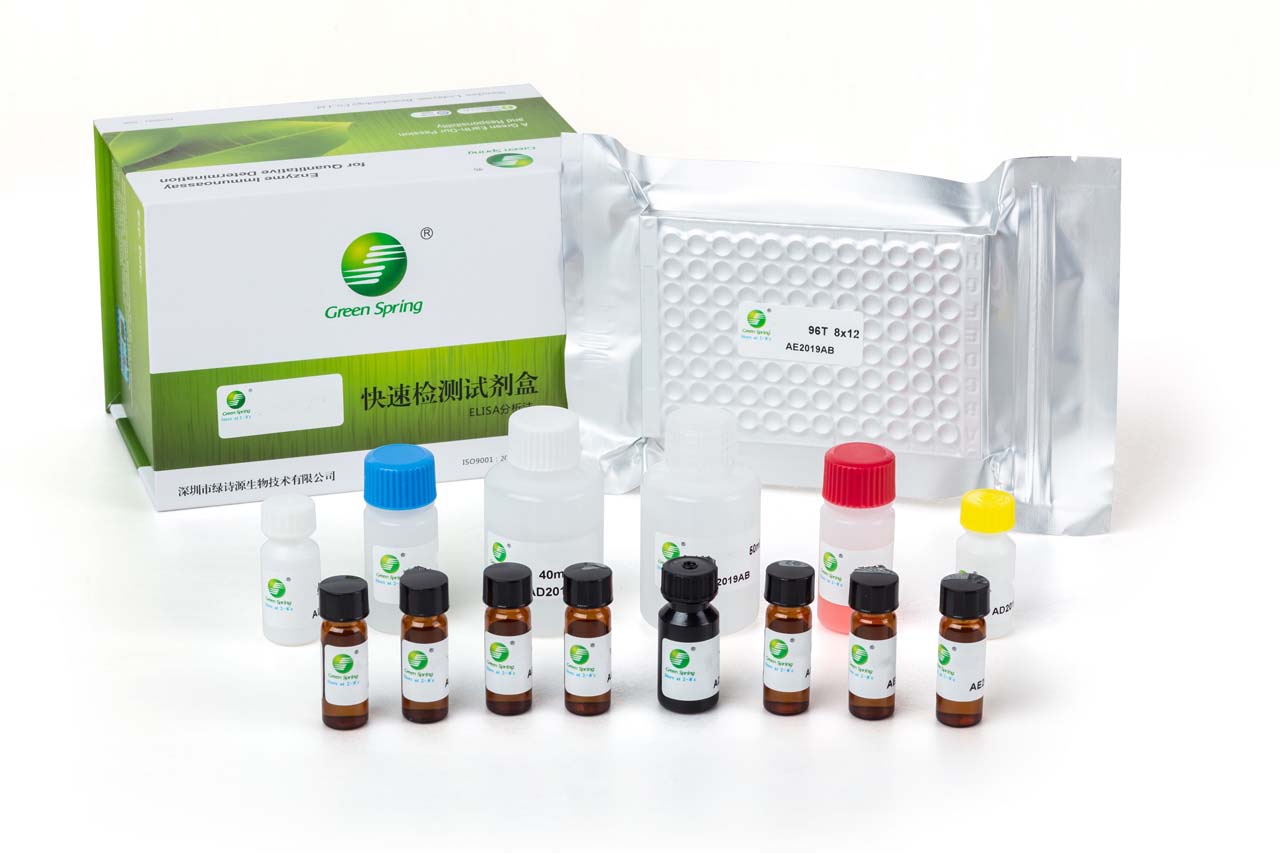
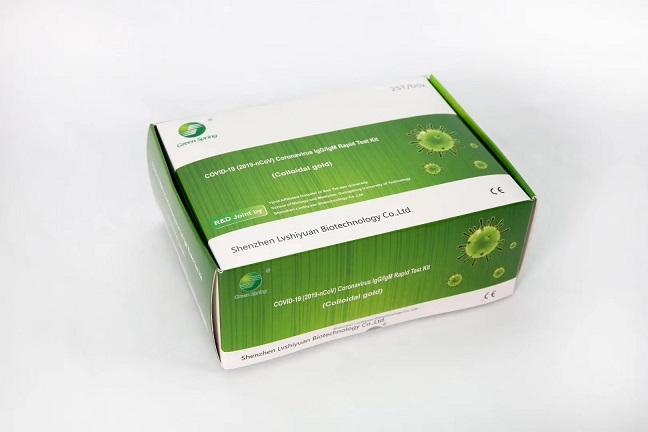
Trichothecenes (T-2) rapid test strip(96T)
- Aug 27, 2026 Anon
Trichothecenes (T-2) rapid test strip(96T)
Catalog No.: LSY-20087
1. Brief
This product is used for testing Trichothecenes (T-2) in grain, feed qualitatively, the whole test procedure only need 15-20min, easy to operate with high sensitivity.
2. Specifications: 96tests/box
3. Contents
Components | Quantity |
1) T-2 test strip and micro-well reagent | 12 tubes(8 strips and 8 micro-well packed into 1 tube ) |
2) Manual | 1 piece |
3) T-2 sample dilution | 4 bottles |
4. Application: Grain, feed
5.Detection limit: 200~400μg/kg (ppb)
6. Date of manufacture and batch number: See bag and outer box for details.
7. Principle
The Trichothecenes (T-2) rapid test strip is based on competitive inhibition immuno-chromatographic principle. In the flow process, T-2 in the sample combined with T-2 specific colloidal gold-labeled monoclonal antibody, Inhibit the combination between antibody and T-2-BSA conjugate on Test line of NC membrane, lead to the color change of Test line.
8.Required equipment and consumables
Instruments: Electronic balance, centrifuge, micropipette, vortex mixer, homogenizer.
Consumables: 10ml/15ml centrifuge tubes, 2ml/1.5ml centrifuge tubes, disposable pipette tips, ethanol (analytical grade), purified water.
9.Pre-treatment requires liquid configuration
T-2 sample extracting buffer: 10% ethanol buffer: 10mL of ethanol (analytical grade) + 90mL of pure water
10.Sample preparation
Weigh 3.0±0.05g homogeneous sample (passing through 20 mesh screen) into a 50mL centrifuge tube, If the sample is a feed with strong or relatively high water absorption, switch to a 15mL centrifuge tube, add 6mL of T-2 sample extracting buffer into the centrifuge tube, fully shake for 3min, centrifuge at 4000r/min for 5min or let it stand to separate into layers to obtain the supernatant.
High water-absorbing feed such as: expanded corn, bran, rice polish, rice husk, straw, corn cob, cottonseed, etc.
11.Sample dilution
Add supernatant and T-2 sample dilution according to the following method, and mix them well for inspection.
1) 200μg/kg detection limit
Take 200μL of supernatant and add it to a 2mL or 1.5mL centrifuge tube. Then add 200 μL of T-2 sample dilution to the centrifuge tube and mix well before testing.
2) 400μg/kg detection limit
Take 200μL of supernatant and add it to a 2mL or 1.5mL centrifuge tube. Then add 300 μL of T-2 sample dilution to the centrifuge tube and mix well before testing.
12. Operation procedures
1). Please read the instructions carefully before use. Allow this test strip and the sample to reach room temperature before use.
2). Take out the required number of micro-wells and test strip and make proper marks. Please use them as soon as possible within 1 hour. Seal the remaining reagents immediately to prevent moisture.
3). Use a micropipette to aspirate 200µl of the sample into a micro-well, gently pipette up and down to fully mix it with the lyophilized powder in the micro-well (this step is important).
4). Incubate at room temperature (20-40℃) for 5 minutes to complete the first step of the reaction; insert the marked test strip into the micro-well (with the MAX line printed facing downwards, ensuring it is fully immersed in the solution).
5). Immerse the test strip in the microwell for 5 minutes, and the second step of the reaction is completed.
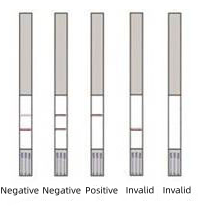
6). Take out the test strip and interpret the result within 1 minute according to the schematic diagram. Interpretation at other times is invalid.
13. Test Result Interpretation
13.1 Negative: The quality control line (C line) shows a red band, and the testing line (T line) also shows a red band; Indicating that the sample does not contain T-2 toxin or the content is below the detection limit;
13.2 Positive: A red band appears on the quality control line (C line), while no red band appears on the testing line (T line); Indicating that the T-2 toxin content in the sample is higher than the detection limit;
13.3 Invalidation: C line isn’t seen wine red. It means the test strip is out of efficacy, out of date or improper operation. Please run the test again using another package. If the invalid tests keep happening, please contact us.
14. Precautions
1). The test strip is intended for single use at room temperature; do not use expired test strips.
2). Disposable pipette tips cannot be reused to avoid cross-contamination.
3). During use, try not to touch the white film surface in the center of the test strip; avoid direct sunlight and direct fan blows.
4). Tap water, distilled water, or deionized water cannot be used as negative controls.
5). In case of a positive result, it is recommended to conduct a retest using this test strip.
6). Due to differences in samples, some test lines may appear lighter or grayer in color, but as long as a red band appears, it can be determined.
7). Due to the complexity of the finished feed formula, it may contain interfering substances; there may be slight differences in the results between negative spiked samples and real samples due to different toxin binding modes.
8). If you encounter any issues during the test, please contact our company.
15. Safety performance and waste disposal
The test strips and their packaging of this product are non-toxic and harmless, and can be disposed of as dry garbage after use.
16. Storage and expiry date
Storage: Store at 2-8 ℃ in dark, sealed, dry place, no frozen.
Expiry date: 12 months; date of production is on box.
Shenzhen Lvshiyuan Biotechnology Co., Ltd
D Building, National Biological Industrial Park of Marinelife, No.2 Binhai Road, Dapeng, Shenzhen, 518120 China
Tel. 86-755-28438788/18165709090
Fax 86-755-28938800
Email: info@lsybt.com
www.lsybt.com