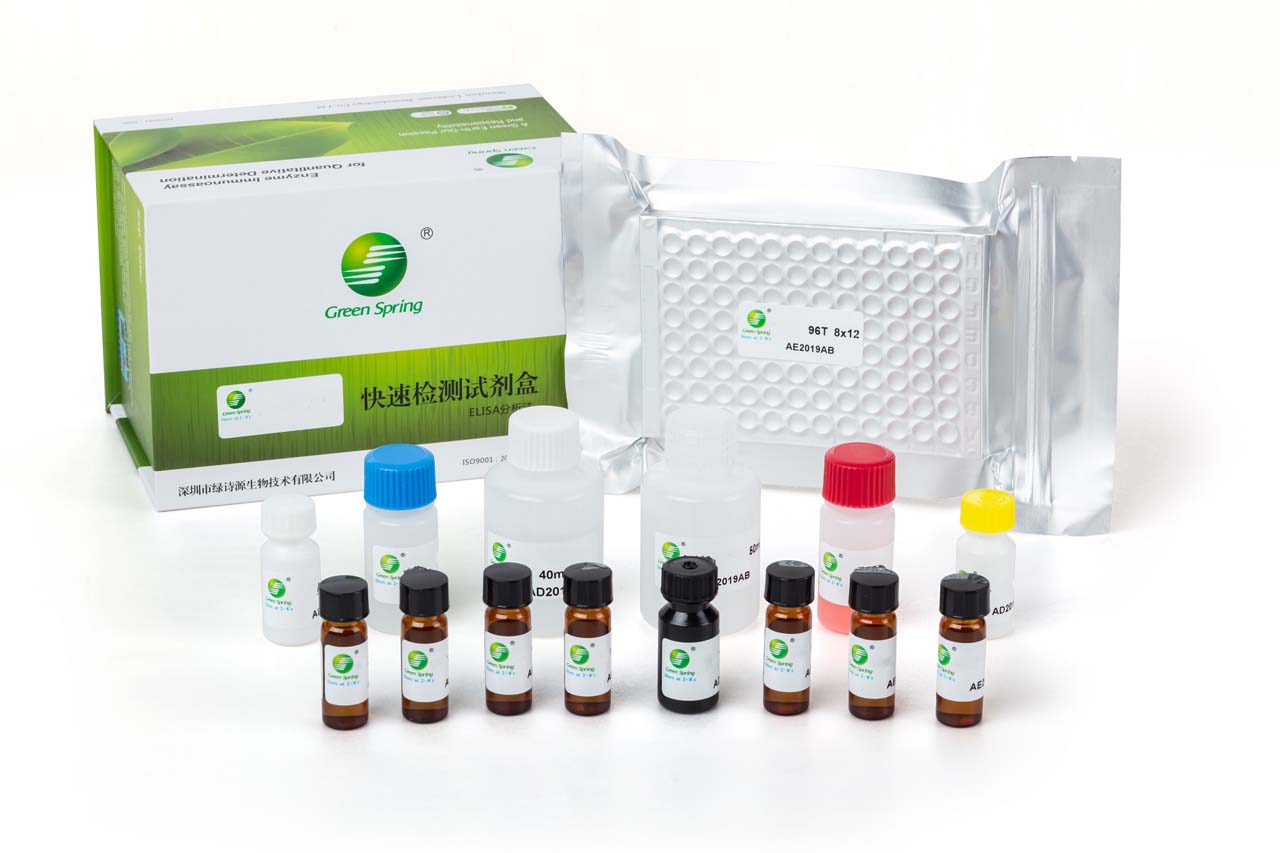
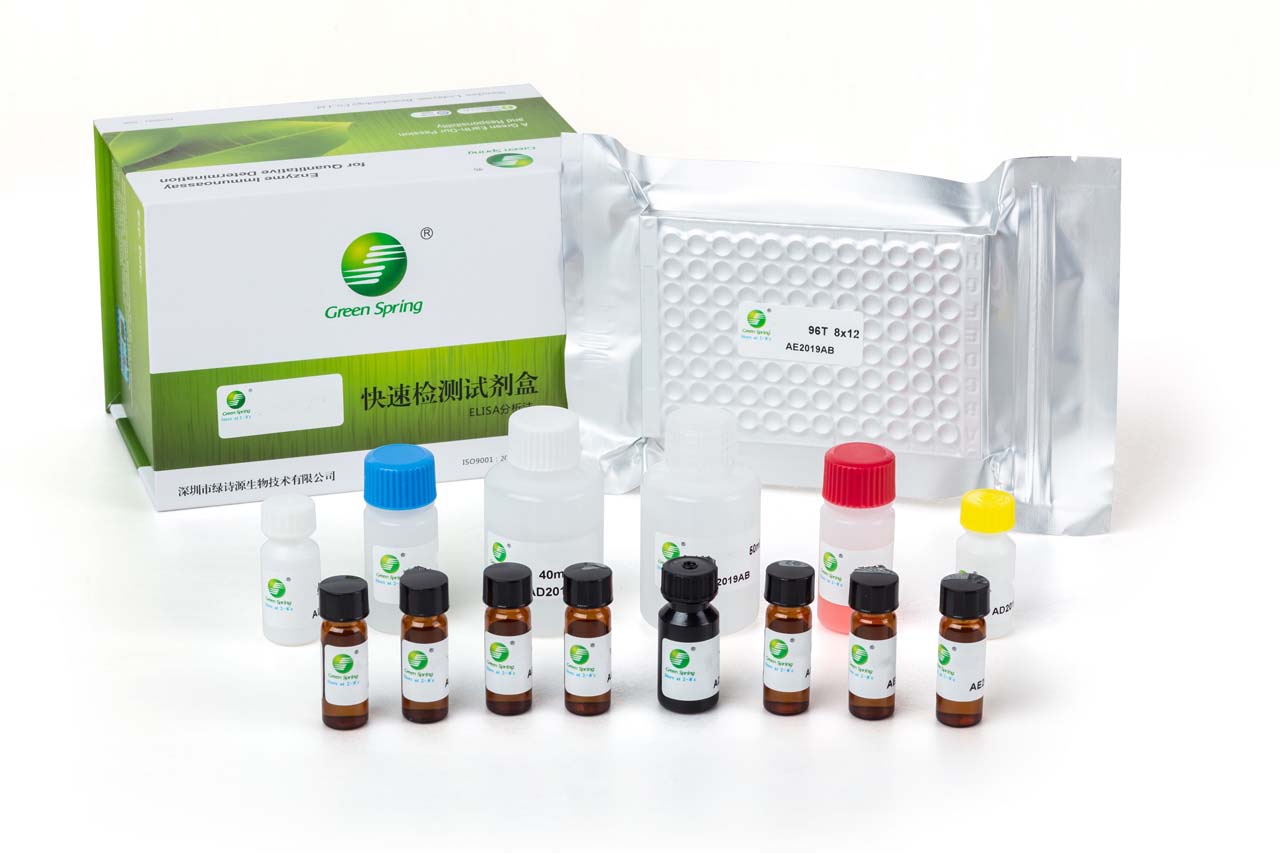
Thiamphenicol ELISA Test Kit
- Aug 28, 2026 Anon
Thiamphenicol ELISA Test Kit
Catalog No. :LSY-10069
1. Principle
This test kit is based on the indirect competitive enzyme immunoassay for the detection of Thiamphenicol in samples. The coupling antigens are pre-coated on the micro-well stripes. The Thiamphenicol in the sample and the conjugate antigens pre-coated on the micro-well stripes compete for the anti- Thiamphenicol antibodies. After the addition of the enzyme conjugate, the TMB substrate is added for coloration. The optical density (OD) value has a negative correlation with the Thiamphenicol concentration in the sample. This value is compared to the standard curve and the Thiamphenicol concentration is subsequently obtained.
2. Technical specifications
Sensitivity: 0.1ppb
Incubator temperature: 25℃
Incubator time: 30min~15min
Detection limit:
Tissue (Method 1) 1ppb
Tissue (Method 2) 0.2ppb
Recovery rate:
Tissue 90 ±30%
Cross-reaction rate:
Thiamphenicol 100%
Florfenicol 105%
Chloramphenicol <1%
3. Components
1 | Micro-well strips | 12 strips with 8 removable wells each | |
2 | 6× standard solution (1 mL each) | 0ppb | 0.1ppb |
0.3ppb | 0.9ppb | ||
2.7ppb | 8.1ppb | ||
3 | High concentration standard | 1ml | 1ppm |
4 | Enzyme conjugate | 7ml | red cap |
5 | Antibody working solution | 7ml | blue cap |
6 | Substrate A solution | 7ml | white cap |
7 | Substrate B solution | 7ml | black cap |
8 | Stop solution | 7ml | yellow cap |
9 | 20× concentrated washing buffer | 15ml | white cap |
10 | 20X extracting A solution | 15ml | yellow cap |
11 | 2X extracting B solution | 50ml*2 | transparent cap |
12 | 20X concentrated redissolving solution | 10ml | black cap |
4. Materials required but not provided
1) Equipments: microplate reader, homogenizer, printer, nitrogen-drying device, oscillator, centrifuge, measuring pipets, balance( a reciprocal sensibility of 0.01 g), incubator.
2) Micropipettors: single-channel 20-200µL and 100-1000 µL, and multi-channel 30~300 μl;
3) Reagents: NaOH, Acetonitrile, ethyl acetate, Na₂SO₄
5. Sample pre-treatment
Instructions
The following points must be dealt with before the pre-treatment of any kind of sample:
1) Only the disposable tips can be used for the experiments and the tips must be changed when used for absorbing different reagents.
2) Before the experiment, each experimental utensil must be clean and should be re-cleaned if necessary, in order to avoid the contamination that interferes with the experimental results.
Solution preparation before sample pre-treatment:
Solution 1 Extracting A solution
1 part of 20X extracting A solution + 19 parts of deionized water
Solution 2 Extracting B solution
1 part of 2X extracting B solution + 1 part of deionized water
Solution 3 Acetonitrile-ethyl acetate mixed solution
V Acetonitrile:V ethyl acetate = 4 : 1
Solution 4 1M NaOH solution
Take 4g solid NaOH, add deionized water to make the volume to 100 ml
Solution 5 0.01M NaOH solution
Take 0.04g solid NaOH, add deionized water to make the volume to 100 ml
Solution 6 Sample redissolving solution:
Dilute the 20× concentrated redissolving solution with deionized water at 1:19 (1 part 2× concentrated redissolving solution +19 parts of deionized water).
Samples preparation
a) Tissue (method 1)
1) Weight 2 ± 0.05 g of the homogenized tissue sample into a 50ml centrifuge tube, add 3ml Extracting A solution, vortex for 3min;
2) Then add 600µl 1M NaOH solution and 2.4ml Extracting B solution, vortex for 3min;centrifuge at above 4000 r/min at 25℃ for 5 min;
3) Take 200µl up-layer liquid, add 300µl Sample redissolving solution, mix it evenly;
4) Take 50 µL of above mixed solution for analysis.
Fold of dilution of the sample: 10
b) Tissue (method 2)
1) Weight 2 ± 0.05 g of the homogenized tissue sample into a 50ml centrifuge tube;
2) Add 2ml 0.01M NaOH solution and 6ml Acetonitrile-ethyl acetate mixed solution, then add 2g Na₂SO₄, vortex for 3min; centrifuge at above 4000 r/min at 25℃ for 5 min;
3) Take 4ml of organic phase into a drying container and blow dry with nitrogen at 56°C;
4) Add 1 mL of the sample redissolving solution to dissolve the dry residues, then add 1 mL N-hexane, mix for 10 seconds; centrifuge at above 4000 r/min at 25℃ for 5 min.
5) Remove up-layer organic phase, take 50 µL of the down-layer liquid for analysis.
Fold of dilution of the sample: 1
6. ELISA procedures
6.1 Instructions
1 Bring all reagents and micro-well strips to the room temperature before use (20-25 ℃).
2 Return all reagents to 2-8 ℃ immediately after use.
3 The reproducibility of the ELISA analysis, to a large degree, depends on the consistency of plate washing. The correct operation of plate washing is the key point in the ELISA . procedures.
4 For the incubation at constant temperatures, all the samples and reagents must avoid light exposure, and each microplate should be sealed by the cover membrane.
6.2 Test implementation
1 Take out all the necessary reagents from 2~8 ℃ environment, bring them to the room temperature (20-25 ℃) for at least 30 min, note that each liquid reagent must be shaken evenly before use.
1. Take the required micro-well strips and plate frames. Re-sealed the unused microplate, store at 2-8℃, not frozen.
2. Solution preparation: dissolve 15ml of the 20×concentrated washing buffer with deionized water at 1:19 (1 part of 20×concentrated washing buffer + 19 parts of deinonized water ) or prepare the volume as required.
3. Numbering: number the micro-wells according to samples and standard solution; each testing sample and standard solution should be performed in duplicate; record their positions.
4. Add 50 µL of the sample or standard solution to separate duplicate wells, add 50 µL of the enzyme conjugate, then add 50 µL of the antibody working solution into each well. Mix gently by shaking the plate manually, seal the microplate with the cover membrane, and incubate at 25 ℃ for 30 min.
5. Wash the microplate with the washing buffer at 250 µL/well for 4-5 times. Each time soak the well with the washing buffer for 15-30s and then flap to dry (if there are the bubbles after flapping, cut them with the clean tips).
6. Coloration: add 50 µL of the substrate A solution and then 50 µL of the substrate B solution into each well. Mix gently by shaking the plate manually, and incubate at 25 ℃ for 15 min at dark for coloration.
7. Determination: add 50 µL of the stop solution into each well, Mix gently by shaking the plate manually. Set the wavelength of the microplate reader at 450 nm to determine the OD value (we recommend to read the OD value at the dual-wavelength 450/630 nm within 5min).
7. Result judgment
There are two methods to judge the results; the first one is the rough judgment, while the second is the quantitative determination. Note that the OD value of the sample has a negative correlation with the content of Thiamphenicol.
7.1 Qualitative determination
The concentration range (ng/mL) can be obtained from comparing the average OD value of the sample with that of the standard solution. Assuming that the OD value of the sampleⅠ is 0.238, and that of the sampleⅡ is 0.946, the OD value of standard solutions is: 1.845 for 0ppb, 1.542 for 0.1ppb, 1.130 for 0.3ppb, 0.635 for 0.9ppb, 0.326 for 2.7ppb, 0.156 for 8.1ppb, accordingly the concentration range of the sampleⅠ is 2.7 to 8.1, and that of the sample Ⅱ is 0.3 to 0.9ppb.
7.2 Quantitative determination
The mean values of the absorbance values obtained for the average OD value (B) of the sample and the standard solution divided by the OD value (B0) of the first standard solution (0 standard) and subsequently multiplied by 100%, that is,
Percentage of absorbance value = | B | ×100% |
B0 |
B—the average (double wells) OD value of the sample or the standard solution
B0—the average OD value of the 0 ng/mL standard solution
Draw the standard curve with the absorption percentages of the standard solutions and the semilogarithm values of the Florfenicol standard solutions (ng/mL) as Y- and X-axis, respectively. Read the corresponding concentration of the sample from the standard curve by incorporating its absorption percentage into the standard curve. The resulting value is subsequently multiplied by the corresponding dilution fold, thus finally obtaining the Thiamphenicol concentration in the sample.
Using the professional analyzing software of this kit will be more convenient for the accurate and rapid analysis of a large amount of samples. (Please contact us for this software).
8. Precautions
1 The room temperature below 25 ℃ or the temperature of the reagents and the samples being not returned to the room temperature (20-25 ℃) will lead to a lower standard OD value.
2 Dryness of the microplate in the washing process will be accompanied by the situations including the non-linear standard curves and the undesirable reproducibility; So continue to next step immediately after washing.
3 Mix evenly, otherwise there will be the undesirable reproducibility;
4 The stop solution is the 2 M sulfuric acid solution, avoid contacting with the skin.
5 Do not use the kit exceeding its expiry date. The use of diluted or adulterated reagents from the kits will lead to the changes in the sensitivity and the detecting OD values. Do not exchange the reagents from the kits of different lot numbers to use.
6 Put the unused microplate into an auto-sealing bag to re-seal it. The standard substance and the colourless color former is light sensitive, and thus they cannot be directly exposed to the light.
7 Discard the colouration solution with any color that indicates the degeneration of this solution. The detecting value of the 0 standard solution of less than 0.5 indicates its degeneration.
8 The optimum reaction temperature is 25 ℃, and too high or too low temperatures will result in the changes in the detecting sensitivity and OD values.
9. Storage and expiry date
Storage: store at 2-8 ℃, not frozen.
Expiry date: 12 months; date of production is on box.
Reminder: If there is air leakage in the vacuum packaging bag of the microplate, the microplate is still valid and does not affect the experimental results. Please feel free to use it.
Shenzhen Lvshiyuan Biotechnology Co., Ltd
D Building, National Biological Industrial Park of Marinelife, No.2 Binhai Road, Dapeng, Shenzhen, 518120 China
Tel. 86-755-28438788/86-18165709090
Fax 86-755-28938800
Email: info@lsybt.com
www.lsybt.com